

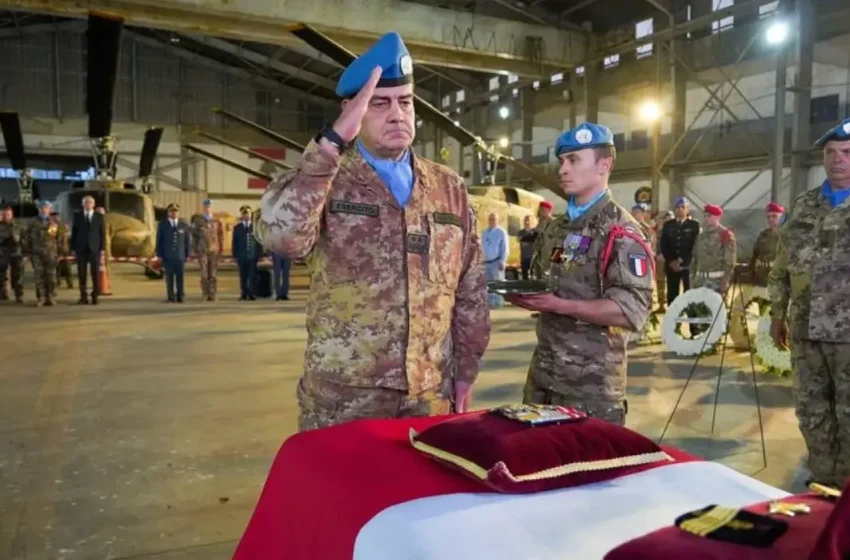
French peacekeeper killed in Lebanon exposes UN mission risks
The assassination of a French peacekeeper in south Lebanon has rekindled the debate on the operational risks of United Nations missions in war-torn countries. The soldier who was under the United Nations Interim Force in Lebanon was in a patrol in the area of Ghandouriyeh when the patrol was fired at with small arms. Three other peacekeepers were also wounded and this is one of the most severe incidents that had occurred to the UN personnel in the recent months.
This attack happened even after a ceasefire was declared highlighting the instability of security measures in the area. Authorities reported that the peacekeepers were distinctively recognized, and their insignia indicated clearly that they were part of the UN, which supported the legal belief that these individuals should not be attacked. But the case is indicative of a growing disparity between the legal safeguards and the working conditions on the street.
Security Council Response And Legal Implications
The global action has focused on accountability and condemnation. A powerful statement was made by the United Nations Security Council denouncing the attack and demanding a complete investigation. The Council restated that the safety of peacekeepers is safeguarded by international law and violations can be classified as war crimes.
Legal Protections And Enforcement Limits
The international law of humanitarianism offers clear safeguards to the peacekeeping forces under the UN mandate. Nevertheless, its implementation is still subject to state collaboration and political goodwill. Although legal frameworks provide definite norms, they have a weak deterrent effect when accountability mechanisms are slow or disputed.
The words of UN officials have emphasized that assaults on peacekeepers hamper not only the individual missions but also the larger initiatives to stabilize conflict zones. The deterrence aimed at the framing of such incidents as potential war crimes but the practical implementation of such deterrence is still uneven.
Resolution 1701 And Operational Boundaries
The mandate of UNIFIL is embedded in the United Nations Security Council Resolution 1701 that gives the force the responsibilities of monitoring hostilities and assisting the Lebanese Armed Forces. Freedom of movement and operational independence which are very essential to effective monitoring are highlighted in the resolution.
The attack of April 2026 shows the conflict of the mandate requirements and the security constraints. Peacekeepers are expected to work where they are most likely to be violated but it is these areas that put them at risk. This organizational issue makes mission effectiveness more difficult and causes concerns about the viability of the mandate.
The UNIFIL Mandate In A Volatile Environment
UNIFIL is stationed along the Blue Line, which has been characterized by a continuous tension between Israel and Hezbollah. The role of the mission has also changed with the dynamics in the region and since 2024 and 2025 when there were more cross-border incidents.
Expanding Operational Risks Since 2025
In 2025, the functioning of UNIFIL became more complicated due to the developments. The predictability of patrol routes has been reduced by increased military activity, as well as by warnings by regional actors that there are unsafe zones. Such circumstances have compelled the mission to modify its deployment policies without losing sight.
The issue is in the balance between presence and safety. Diluted patrols can restrict exposure yet decrease surveillance abilities. On the other hand, presence at a high level is more likely to result in such incidents as the April 18 attack.
Freedom of Movement Versus Force Protection
The success of UNIFIL is determined by its free move throughout its operating region. Movement restrictions, be it through security interests or local forces, limit the ability of the mission to check adherence to ceasefire conditions.
Simultaneously, force protection has turned into an increasingly important priority. Alterations in patrol patterns, base placements, and engagement guidelines are indicative of an attempt to reduce risk. Nevertheless, these interventions cannot completely reduce exposure in a competitive environment.
Competing Political Narratives Around The Attack
There is still some controversy over who should be blamed as the culprit of the attack indicating that there is some tension in the region. The case has been blamed on Hezbollah by France and the group has denied any involvement depicting how challenging it is to reach an agreement in a political environment that is hot.
France’s Position And Strategic Messaging
French authorities such as Emmanuel Macron have used the attack as an indication of the issues like the existence of armed groups who are not states but which operate in Lebanon. Such a view highlights the dangers of the peacekeepers and supports the idea that France was committed to multilateral security operations.
The French reaction has a wider strategic connotation as well. Paris emphasizes the need to collaborate internationally in ensuring stability along disputed boundaries by pointing out the risks its staff face.
Hezbollah’s Denial And Regional Dynamics
The denial in Hezbollah is a variant of a different story, which challenges the attribution process and offers other meanings of the घटना. This deviation is a reflection of how incidents surrounding peacekeepers may get integrated into greater political arguments.
There is no generally accepted attribution mechanism, which allows conflicting narratives to exist. Every actor perceives events in a manner such that it serves its strategic interests, making it difficult to create accountability.
Operational And Strategic Risks For UN Peacekeeping
The killing of a French peacekeeper raises broader questions about the future of UN peacekeeping missions in high-risk environments. The incident is part of a pattern rather than an isolated घटना, with multiple attacks reported in recent weeks.
Rising Costs For Troop-Contributing Countries
Countries contributing troops to UN missions must weigh the benefits of participation against the risks to personnel. Incidents involving fatalities can influence domestic political debates and affect decisions on future deployments.
France, as a major contributor to UNIFIL, faces the challenge of maintaining its commitment while addressing concerns about troop safety. Similar considerations apply to other contributing nations, particularly if incidents continue.
Mission Credibility And Effectiveness
The credibility of UN peacekeeping missions depends on their ability to operate safely and effectively. Repeated attacks on peacekeepers can undermine confidence in the mission’s capacity to fulfill its mandate.
At the same time, withdrawal or reduction of forces could create security gaps, potentially exacerbating instability. This creates a dilemma in which maintaining presence carries risk, but reducing presence carries its own consequences.
The Broader Implications For Regional Stability
The April 2026 incident highlights the interconnected nature of local events and regional dynamics. Tensions between Israel and Hezbollah, combined with internal Lebanese challenges, create a complex environment for peacekeeping operations.
Ceasefire Fragility And Escalation Risks
The attack occurred shortly after a temporary cessation of hostilities, raising questions about the durability of such agreements. Ceasefires in the region often depend on informal understandings as much as formal arrangements, making them vulnerable to breakdown.
The targeting of peacekeepers, whether intentional or accidental, can escalate tensions by introducing international actors into the conflict narrative. This increases the stakes for all parties involved.
The Role Of Multilateral Presence
UNIFIL’s presence serves as both a monitoring mechanism and a symbolic commitment to stability. The mission’s visibility is intended to deter violations and provide a channel for communication between parties.
However, visibility also increases vulnerability. Peacekeepers operate in areas where tensions are highest, making them potential targets in periods of escalation. This dual role underscores the complexity of modern peacekeeping.
A Mission At A Strategic Crossroads
The killing of a French peacekeeper in Lebanon underscores the evolving challenges facing UN missions in conflict zones. Legal protections, political commitments, and operational realities intersect in ways that shape both risk and effectiveness.
As incidents accumulate, the balance between mission objectives and personnel safety becomes increasingly difficult to maintain. The question is not only whether UNIFIL can continue to operate under current conditions, but how its mandate and structure might adapt to a changing security landscape where visibility, neutrality, and vulnerability are closely intertwined.

