

Sudan’s Fourth Year: Global Indifference Fuels Famine Catastrophe?
As Sudan’s war enters its fourth year, the scale of humanitarian breakdown continues to intensify beyond earlier projections. Since April 2023, fighting between the Sudanese Armed Forces and the Rapid Support Forces has transformed the country into one of the largest displacement crises in modern history. The situation has drawn repeated warnings from the United Nations, with Emergency Relief Coordinator Tom Fletcher describing the response as insufficient in both urgency and scope.
By early 2026, an estimated 33.7 million people require humanitarian assistance, representing nearly two-thirds of the population. The conflict has eroded state institutions, disrupted agricultural cycles, and fractured supply chains, creating conditions where famine is no longer a risk but an unfolding reality in multiple regions.
Displacement Numbers Redefine Crisis Scale
Internal displacement has reached approximately nine million people, with millions more fleeing across borders into neighboring countries. These movements have not followed predictable patterns, as shifting frontlines repeatedly uproot communities already displaced once or twice before.
Urban centers such as Khartoum and Port Sudan have absorbed large numbers of displaced families, yet these areas lack functioning infrastructure. Water systems remain damaged, electricity supply is inconsistent, and healthcare facilities operate at minimal capacity, limiting the ability to manage even basic public health needs.
Refugee Flows Strain Regional Stability
Cross-border displacement has reached more than four million, with neighboring states such as Chad and South Sudan facing mounting pressure. Camps along border regions are overcrowded, under-resourced, and increasingly vulnerable to disease outbreaks.
Regional governments, already managing fragile economies, struggle to accommodate these populations. The spillover effect has begun to reshape local labor markets, security dynamics, and humanitarian priorities across the Sahel and Horn of Africa.
Famine Conditions Expand Beyond Isolated Zones
The emergence of famine conditions in North Darfur marks a critical turning point. The Zamzam camp, hosting hundreds of thousands of displaced people, has crossed internationally recognized famine thresholds, with mortality rates rising and food access collapsing.
Humanitarian agencies warn that these conditions are not isolated. Instead, they represent the leading edge of a broader deterioration that could spread rapidly if access constraints persist.
Zamzam Camp Illustrates Systemic Breakdown
In Zamzam, aid delivery has been sporadic due to encirclement by armed groups. Limited air drops have failed to meet the scale of need, leaving families dependent on informal coping mechanisms such as selling remaining assets or reducing meals to once per day.
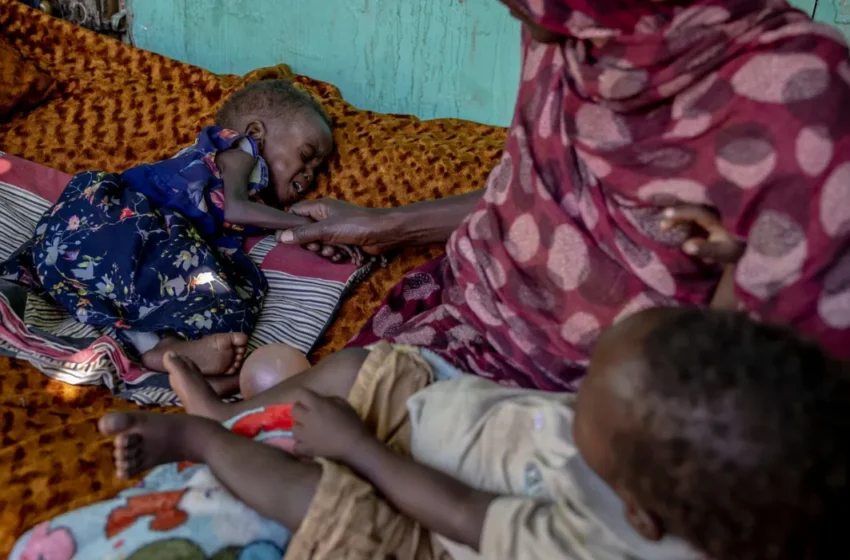
Malnutrition rates among children have reached emergency levels, with severe wasting increasingly visible. Health workers report that preventable diseases now carry higher fatality rates due to weakened immune systems and lack of medical supplies.
Broader Hunger Indicators Signal Escalation
Across Sudan, approximately 25 million people face acute food insecurity. Agricultural production has declined sharply due to displacement, destruction of farmland, and disrupted planting cycles during 2025.
Food prices have surged multiple times over, driven by scarcity and currency collapse. In many areas, staple goods are no longer accessible to large segments of the population, pushing households into irreversible poverty traps.
Aid Access Constraints Deepen Humanitarian Impact
One of the defining features of the crisis remains the systematic obstruction of humanitarian access. Both major parties to the conflict have been accused of restricting aid flows, either through bureaucratic barriers or direct attacks on convoys.
The operational environment has become one of the most dangerous globally for aid workers, with hundreds killed since the conflict began. These risks have forced agencies to scale back operations in the most affected regions.
Violence Against Aid Operations Limits Reach
Reports indicate over a thousand incidents involving aid disruption since 2023, including looting, hijacking, and targeted attacks. These actions have significantly reduced the volume of supplies reaching famine-affected areas.
Convoys attempting to reach Darfur and Kordofan frequently face delays or complete denial of passage. Even when access is granted, unpredictable security conditions often force last-minute cancellations.
Funding Gaps Undermine Response Capacity
The humanitarian response plan for 2026 remains critically underfunded, with only a fraction of required resources secured. Donor fatigue, influenced by competing global crises, has constrained available funding.
While some countries have increased contributions, the overall shortfall limits the ability to scale interventions. This gap is particularly evident in nutrition programs, where demand far exceeds available supplies.
External Influences Prolong Conflict Dynamics
The conflict has increasingly drawn in external actors, complicating prospects for resolution. Arms flows, financial support, and political backing from regional and international players have sustained both sides’ capacity to continue fighting.
This external involvement has transformed the conflict from a domestic power struggle into a more complex proxy environment, where strategic interests intersect with local grievances.
Resource Competition Drives Prolonged Violence
Control over key economic assets, including gold mines and trade routes, has become a central driver of conflict. These resources provide revenue streams that finance military operations, reducing incentives for compromise.
Economic collapse has further intensified competition, as armed groups seek to secure territory that offers financial advantages. This dynamic perpetuates cycles of violence and undermines ceasefire efforts.
Diplomatic Efforts Struggle to Gain Traction
Multiple negotiation initiatives throughout 2025 failed to produce lasting agreements. Talks collapsed amid mutual accusations of violations, reflecting deep mistrust between the parties.
International mediation efforts continue, but progress remains limited. Without coordinated pressure from major powers, diplomatic initiatives lack the leverage needed to enforce compliance.
Global Governance Challenges Reflect Broader Inaction
The response of global institutions has come under increasing scrutiny. Despite repeated briefings and warnings, decisive action has been limited, highlighting structural constraints within international governance systems.
The United Nations Security Council has struggled to move beyond statements, as divisions among major powers hinder consensus on stronger measures.
Council Divisions Limit Policy Outcomes
Efforts to adopt binding resolutions have faced obstacles due to competing geopolitical priorities. This has resulted in a reliance on voluntary commitments, which lack enforcement mechanisms.
General Assembly initiatives have attempted to fill the gap, but their impact remains constrained by the absence of coordinated implementation.
Regional Pressures Intensify Without Resolution
Neighboring countries face growing challenges as displacement continues. Border regions experience increased competition for resources, while local tensions rise between host communities and refugees.
These pressures risk destabilizing already fragile regions, potentially expanding the scope of the crisis beyond Sudan’s borders.
2025 Developments Shaped the Current Trajectory
Events throughout 2025 played a critical role in accelerating the current humanitarian conditions. Escalations in key regions, combined with environmental shocks, created a convergence of crises that overwhelmed response systems.
Flooding during the year damaged agricultural production, while intensified fighting displaced additional populations. These factors compounded existing vulnerabilities, pushing many communities closer to famine thresholds.
Escalation Patterns Reduced Humanitarian Space
Military offensives in regions such as Gezira led to mass displacement and restricted access for aid organizations. These operations disrupted supply routes that previously supported vulnerable populations.
The cumulative effect of these disruptions has been a steady contraction of humanitarian space, limiting the ability to deliver timely assistance.
Health Crises Compound Food Insecurity
The spread of cholera and other diseases has further strained the humanitarian response. Weak health systems struggle to contain outbreaks, particularly in overcrowded camps.
Malnutrition increases susceptibility to disease, creating a cycle where health and food insecurity reinforce each other. Breaking this cycle requires coordinated interventions that remain difficult under current conditions.
Sudan’s famine thresholds now represent more than a humanitarian emergency; they reflect a convergence of conflict, governance failure, and constrained global response. As the lean season advances and conditions deteriorate further, the trajectory of the crisis raises difficult questions about whether existing mechanisms can adapt quickly enough, or whether the gap between warning and action will continue to widen in ways that reshape expectations of international responsibility.

