

Middle East War Risks Undermining Syria’s Fragile Recovery
The United Nations has repeatedly warned that the ongoing Middle East war, centered on Gaza and its regional reverberations, threatens to unravel Syria’s fragile recovery after more than a decade of civil conflict. In March 2026, senior UN officials briefed the Security Council, noting that even limited escalation could trigger renewed economic shocks, security disruptions, and humanitarian setbacks. Syria remains heavily aid‑dependent, with its economy still approximately 60 percent below pre‑2011 levels. The UN emphasizes that external shocks, including interruptions to remittances, cross‑border trade, and restoration programmes, could disproportionately affect millions of vulnerable Syrians.
The timing of the Council discussion follows modest stabilization signals during 2024–2025, such as the reopening of key infrastructure, partial resumption of schools and healthcare services, and the gradual return of local commerce. However, these gains remain localized and fragile. The UN Deputy Secretary‑General underscored that “regional instability can easily spill over into Syria and undermine the fragile gains made in stabilization and basic‑service‑delivery,” reflecting the country’s continued reliance on a relatively peaceful regional context.
Uneven Recovery and Regional Dependence
The UN notes that Syria’s recovery has been patchy, benefiting some areas while leaving others exposed to economic and security fragility. Localized infrastructure improvements coexist with widespread disruptions in basic services, illustrating the unevenness of stabilization efforts.
Humanitarian Implications
The fragility of Syria’s recovery is compounded by the population’s dependence on aid. Any escalation in the broader Middle East risks eroding both humanitarian access and the operational space required for sustainable recovery.
Economic and Humanitarian Pressures
UN officials highlight that Syria’s partial recovery relies on a thin economic base, heavily dependent on imports, remittances, and international financing. The UN Economic and Social Commission for Western Asia (ESCWA) warns that renewed regional hostilities could increase fuel, food, and transport costs, further straining household budgets. In 2025, food supply chains experienced early disruptions, with staple prices rising across Syrian markets.
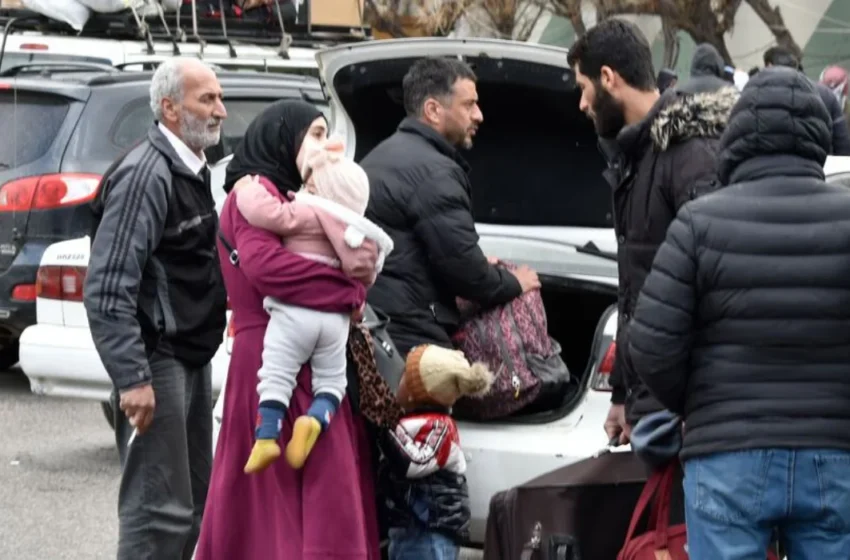
The UN Office for the Coordination of Humanitarian Affairs (OCHA) estimates that 15.3 million Syrians continue to require assistance in 2026, with over 7 million internally displaced and more than 5 million registered as refugees in neighboring countries. UNHCR officials note that ongoing Middle East conflicts have complicated return decisions, as displaced families weigh the risks of returning to Syria against instability in host countries. The UN underscores that regional conflict could intensify a protracted humanitarian crisis even as stabilization initiatives continue.
Vulnerable Populations
Women and children face heightened risks, including sexual violence, family separation, and livelihood loss. UN agencies emphasize the need for protection mechanisms to prevent the further marginalization of these populations.
Aid Access and Constraints
The UN stresses that humanitarian delivery is increasingly constrained by insecurity, damaged infrastructure, and restricted movement, requiring adaptive strategies and closer coordination with local actors to maintain aid flows.
Security and Political Spillover Risks
UN officials caution that the Middle East war could reactivate or energize armed groups within Syria, particularly along its eastern and southern borders. Security Council members including the United States, France, and the United Kingdom have warned that the Gaza conflict could exacerbate sectarian tensions, fuel extremist narratives, and create new pretexts for external military interventions.
Syria’s already complex political landscape remains highly sensitive. The Assad government continues efforts to consolidate authority under sanctions, regional rivalries, and international scrutiny. Moscow and Beijing have emphasized respect for Syrian sovereignty, while Western members highlight that regional escalation could pressure the state’s security apparatus, potentially intensifying restrictions on movement and humanitarian access.
Border Vulnerabilities
The UN identifies Syria’s borders as particularly exposed to spillover effects such as cross-border strikes, drone attacks, and proxy engagements. These vulnerabilities underline the need for careful monitoring and preventive measures to mitigate external shocks.
Political Stability and Governance
Any deterioration in security could reverse modest gains in local governance, civil services, and community-level stabilization, demonstrating the intertwined nature of political and security risks in shaping recovery trajectories.
UN’s Role and Limits of Stabilization
The UN emphasizes that Syria’s recovery is not yet robust enough to withstand major regional shocks. The organization has facilitated reopening schools, partial restoration of healthcare, and localized economic revival, yet these initiatives depend on stable conditions, predictable funding, and functioning regional trade routes. The UN Deputy Secretary‑General highlighted that “humanitarian needs in Syria remain among the highest in the world,” signaling that rising regional tensions could strain aid systems and donor commitments.
Supporting State Functions
The UN’s approach is not designed to substitute for state governance or security but to create space for gradual political, economic, and social stabilization. Agencies stress that the Middle East war tests this model, threatening the security environment, economic recovery, and humanitarian space simultaneously.
Strategic Coordination
The UN urges Security Council cohesion to prevent regional conflict from exacerbating internal instability. Any intensification of the Middle East war may necessitate operational recalibrations, including scaling up aid, expanding protective measures, and preparing for additional displacement waves.
The Wider Question of Post-War Syria
The Middle East war’s potential to undermine Syria’s fragile recovery raises broader questions about long-term stability. UN agencies and analysts note that recovery has relied more on local ceasefires, international aid, and the recalibration of regional interests than on comprehensive peace. The Gaza-Israel conflict may disrupt this fragile equilibrium, potentially affecting sanctions, financial restrictions, and security measures that primarily impact civilians rather than political elites.
At the same time, the UN suggests that this moment presents an opportunity to rethink recovery sequencing, integrating economic stabilization, infrastructure investment, and local governance alongside security measures. Syria’s recovery could become less contingent on the volatility of regional wars if the international community invests strategically. The UN underscores that regional conflict is not just an external risk but also a reflection of unresolved regional fault lines that have shaped Syria’s war and recovery trajectory—dynamics likely to influence the country for years to come.

