

When No Place Is Safe: The Sudan Airstrike and Rising Civilian Deaths
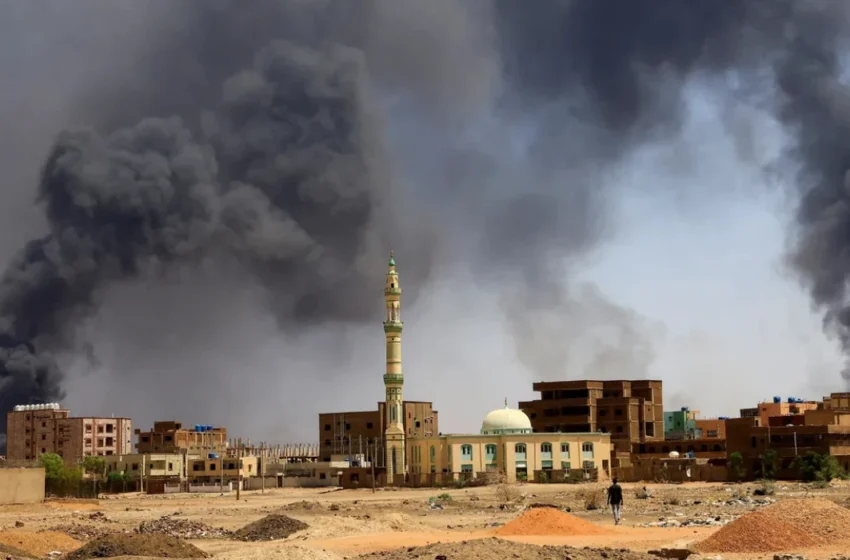
The airstrike on a funeral gathering in Sudan has become a defining moment in a conflict where civilian spaces are increasingly indistinguishable from battlefields. The strike, which targeted mourners during a burial, reflects a broader erosion of protections traditionally afforded to non-combatants. Humanitarian officials describe the incident as symbolic of a wider reality in which even spaces associated with mourning and communal solidarity are no longer shielded from violence.
By 2025, UN-linked assessments had already warned that the conflict between the Sudanese Armed Forces and the Rapid Support Forces was redefining the geography of risk. The phrase “no place is safe” captures a lived reality where routine activities now carry lethal uncertainty, embedding fear into everyday life.
The Expanding Civilian Toll Across Sudan
The scale of civilian harm in Sudan reflects a conflict that has moved beyond conventional frontlines. Violence is no longer confined to military targets but has seeped into the fabric of daily life, where civilians bear the brunt of both direct and indirect consequences. The funeral airstrike serves as a stark example of how the boundaries between combat and civilian existence have collapsed.
Urban Warfare and Population Density
Cities such as Khartoum have witnessed sustained bombardment, with aerial strikes and artillery fire hitting densely populated neighborhoods. By late 2025, humanitarian estimates suggested over 16,000 deaths, though the true figure is likely higher due to access limitations and underreporting.
Urban warfare intensifies civilian risk because essential infrastructure—homes, hospitals, and markets—becomes entangled in military operations. The result is a pattern where civilians are exposed not by proximity to conflict, but by the nature of the conflict itself.
Displacement and Social Fragmentation
The war has displaced more than 12 million people, making Sudan one of the largest displacement crises globally. Repeated displacement fractures family structures and weakens traditional support systems that communities rely on during crises.
Funeral gatherings, often central to communal resilience, now carry additional risk. Targeting such spaces deepens both physical harm and psychological trauma, undermining already fragile social cohesion.
The Collapse of Civilian Protection Mechanisms
Civilian protection in Sudan has deteriorated significantly as both infrastructure and institutional safeguards have eroded. The conflict environment has rendered traditional mechanisms of safety ineffective, leaving populations exposed to continuous risk.
Infrastructure Under Siege
Hospitals, water systems, and electricity networks have been repeatedly damaged or destroyed. By 2025, over 25 million people required humanitarian assistance, reflecting both direct conflict impacts and the collapse of public services.
Medical facilities operate under extreme pressure, with shortages of supplies and personnel. Victims of incidents like the funeral airstrike often face delayed or inadequate treatment, increasing mortality rates beyond the initial attack.
Humanitarian Access Constraints
Aid delivery remains inconsistent due to insecurity and bureaucratic barriers. Humanitarian organizations struggle to maintain operations in areas most affected by violence, limiting their ability to respond effectively.
This gap between need and response creates a cycle where civilian suffering escalates while assistance remains insufficient, reinforcing vulnerability across affected communities.
Human Rights Warnings and Legal Erosion
The Sudan conflict has increasingly raised concerns about the erosion of international humanitarian law. Repeated attacks on civilian spaces suggest a pattern that challenges established legal norms governing armed conflict.
Attacks on Civilian Gatherings
Human rights organizations warn that strikes on funerals, markets, and social gatherings may not be isolated incidents. Such actions undermine the principle of distinction between civilians and combatants.
The funeral airstrike highlights the vulnerability of spaces universally regarded as protected, raising questions about the enforcement of legal safeguards in modern conflict environments.
Accountability and Impunity
Calls for investigations into civilian-targeted attacks have intensified, yet accountability remains limited. The absence of consequences contributes to a perception of impunity among warring parties.
By 2025, observers noted that repeated violations without enforcement risk normalizing such actions, potentially setting precedents beyond Sudan.
Psychological Impact and Societal Breakdown
Beyond physical destruction, the conflict has inflicted deep psychological and social damage. The erosion of safety has reshaped how communities function and how individuals perceive risk.
Trauma and Collective Fear
Survivors increasingly report a sense of constant fear, where daily activities are viewed through the lens of potential danger. Children and adolescents face long-term exposure to violence, affecting their mental health and development.
This normalization of trauma may have generational consequences, influencing social stability and recovery prospects.
Erosion of Community Structures
Community rituals such as funerals play a critical role in maintaining cohesion. When these spaces are targeted, the impact extends beyond immediate casualties, disrupting mechanisms of collective healing.
The weakening of these structures complicates future recovery, as rebuilding trust and social bonds becomes as challenging as reconstructing physical infrastructure.
International Response and Multilateral Constraints
The international response to Sudan’s crisis reflects broader limitations within global governance systems. While condemnation has been consistent, effective intervention has remained limited.
Diplomatic Reactions and Limitations
The United Nations Security Council has issued calls for ceasefires and civilian protection, yet divisions among member states have constrained decisive action.
Similar patterns observed in 2025 across multiple conflicts highlight the difficulty of achieving consensus in high-stakes geopolitical environments.
The Risk of a Forgotten Crisis
Sudan faces the risk of diminishing global attention amid competing crises. Reduced visibility can translate into lower funding and weaker political engagement.
The funeral airstrike underscores the human cost of this disengagement, emphasizing the need for sustained international focus.
The Trajectory of Violence and Civilian Vulnerability
The airstrike on a funeral in Sudan illustrates a broader shift in how modern conflicts unfold, where civilian spaces are no longer peripheral but central to the dynamics of violence. As patterns of warfare continue to evolve, the erosion of boundaries between combat zones and daily life raises fundamental questions about the durability of international norms designed to protect civilians.
What emerges from Sudan is not only a humanitarian emergency but a reflection of how conflict environments are being redefined. The persistence of such incidents suggests that the challenge ahead is not merely ending violence, but restoring the idea that certain spaces—and certain moments of human life—remain beyond the reach of war.

