

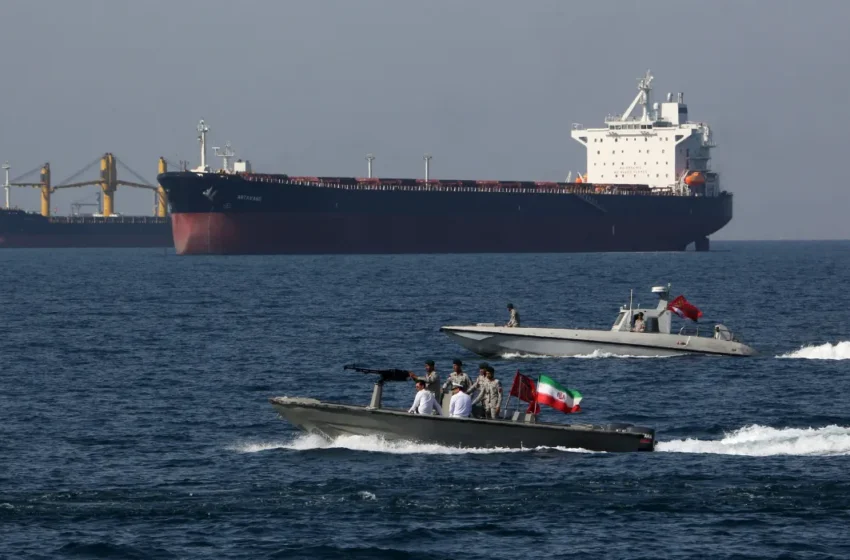
Strait of Hormuz Standoff: US Preemption Versus Iran’s Asymmetric Oil Threats
The Strait of Hormuz has been one of the most vital shipping bottlenecks in world energy logistics. The world is almost at a loss of between 1/5 of the global supply of crude oil which moves through this narrow passage between the Persian Gulf and the Arabian Sea. The most recent escalation, which is widely termed the Strait of Hormuz Standoff, increased with the preemptive attacks launched by the United States forces against Iranian ships that were suspected to be carrying naval mines.
On March 10, 2026, according to the military briefs issued by the United States Central Command, the American troops sank sixteen Iranian boats that were suspected to be prepared to drop mines. The operation was based on intelligence tests that had suggested that the ships would deploy thousands of mines that would have the potential to cripple tanker traffic. The preemptive strike is an indication of a change towards deterrence by immediate disruption and not defensive escort only.
Preemption as Deterrence Strategy
According to the statements of Donald Trump, any efforts to suspend the world oil flows would result in harsh military responses. Washington presented the strike as a scaled down operation aimed at defusing a direct menace to commercial shipping as opposed to a bigger naval conflict with Iran.
These preemptive measures reflect historical similarities of the late 1980s tanker wars but are much more dependent on drone surveillance and satellite intelligence and precision munitions. Analysts observe that contemporary mine warfare does not have to engage in any standard naval combat to disrupt the global markets and thus intercepting them early on is a major strategic concern.
Tactical Scope of the Naval Operation
A video handed out by CENTCOM depicted air attacks against ships that were sailing along vital shipping routes. According to Pentagon leaders, the operation was limited to suspected mine-laying platforms. None of the Iranian war vessels were directly involved in the operation which supports the argument by Washington that the operation was merely meant to protect maritime navigation.
Military planners estimate each boat that was destroyed would have deployed several mines. Since the Iranian army is reported to have thousands of naval mines, even a small deployment would shut the shipping route on a temporary basis.
Asymmetric Iranian Responses and Regional Escalation
The reaction of Iran to the operation indicates the dependence on the asymmetric strategy that has a long history. Instead of facing the United States Navy directly, the Iranian forces and their networks have used the missiles, drones, and proxy attacks throughout the region.
These reactions have escalated after the assassination of Ali Khamenei, who is believed to be a joint killing by the US and Israel in February 2026. Iranian officials state that the thousands of civilian locations were attacked in the framework of the expansion of the conflict, a practice driving the mobilization at home and the revenge against the neighbors.
Missile and Drone Campaigns Across the Gulf
Some of the regional states such as Saudi Arabia, the United Arab Emirates, and Qatar have been targeted by missile and drone attacks. Most of the attacks were not very devastating due to interception by regional air defense systems, but US officials reported dozens of American nationals had minor injuries when military installations were attacked.
These operations prove that Iran can increase the scope of the battle field as compared to the immediate strait. Through attacks on economic and military infrastructure in the Gulf, Tehran is seeking to add to the cost of further US military pressure.
Mine Warfare Legacy and Strategic Messaging
The use of naval mines is also a significant part of the deterrence strategy used by Iran. The Iranian Revolutionary Guards Navy has been developing strategies based on the use of low-cost maritime resources that can interfere with high shipping routes over time.
The Islamic Revolutionary Guard Corps has made several indications that closing the strait is also possible in times of increased confrontation. Though such a complete blockade would most probably lead to tremendous international military reaction, even the intimidation of potential shipping insurers and tanker operators.
Oil Market Disruptions and Energy Security Concerns
The Strait of Hormuz confrontation is already causing major energy market turbulence that is visible in the world markets. The large chunks of tanker traffic have been brought to a halt by insurance companies refusing to cover the vessels operating in the area at least temporarily.
According to energy analysts, it is usually approximately 20 million barrels of oil that are moved daily through the strait. The halt of shipments causes congestion in other routes and exporters in the Gulf region have a very narrow path to follow.
Price Volatility and Supply Shifts
Crude prices surged toward $90 per barrel as there were fears that even partial closure would further constrain the world supply. There was also a sharp response in the refined fuel markets where jet fuel and diesel spreads were increasing.
The Asian countries that are largely dependent on Gulf crude imports have started exploring other suppliers. There has been a report of increased purchases by Russia and this is the result of the changing flows of trading due to the geopolitical instability.
LNG and Maritime Logistics Pressure
The same happens to LNG exports of Qatar. The LNG carriers need secure shipping lanes and specialized infrastructure, and rerouting them is much more challenging than with crude tanker rerouting.
European nations have escalated importation of the United States and are seeking other pipeline sources of supply. These changes underscore the fact that the current energy markets are interconnected, and a crisis in one maritime route can have cascading effects on the rest of the continents.
Diplomatic Pressures and Security Council Dynamics
The crisis worsened with international diplomacy becoming even more intense. The United Nations Security Council members started debating the possible resolutions that could be used to resolve the conflict and security in the Gulf.
The western governments contend that the US strike averted a looming danger to global trade. Iranian officials insist on the fact that the attack was an illegal escalation. The conflict represents the larger geopolitical rift which defines reactions to the crisis.
Great Power Alignments in the Debate
Russia and China have indicated doubt on the American story with focus on civilian deaths in the broader conflict. In the meantime, the media in Europe, which supports Washington, emphasises the necessity to preserve freedom of navigation in the international waters.
The diplomatic stalemate indicates the sophisticated strategy involved in the region. Most governments depend on the constant supply of oil but not many of them are ready to become directly involved in military confrontation.
Prospects for Negotiated De-Escalation
Backchannel diplomacy is active even when the escalation occurs. A number of Gulf states have tried to establish contact between Washington and Tehran in order to avoid further deterioration.
These initiatives are based on previous regional discussions of 2025 which discussed maritime stability mechanisms. The passing of the supreme leader of Iran and constant missile trade has however limited the political ground of compromise greatly.
Naval Power Balance and Strategic Constraints
The military balance in the Persian Gulf overwhelmingly favors the United States. Aircraft carriers, guided-missile destroyers, and advanced surveillance systems provide Washington with a decisive technological advantage.
Iran, however, compensates through tactics designed to exploit vulnerabilities in maritime logistics. Fast attack boats, drones, and mines enable Tehran to threaten shipping without engaging in conventional naval warfare.
Regional Allies and Defensive Coordination
Regional governments have strengthened defensive coordination to counter Iranian attacks. Air defense systems in Gulf states intercepted numerous missiles and drones during the recent escalation.
At the same time, Israel has expanded its military operations targeting Iranian facilities and affiliated groups across the region. These actions broaden the strategic context of the Strait of Hormuz standoff beyond maritime security alone.
Long-Term Strategic Implications
Even if shipping resumes quickly, the confrontation may accelerate structural shifts in global energy policy. Governments increasingly view chokepoint vulnerabilities as strategic risks, prompting investments in alternative supply routes and renewable energy systems.
Energy security discussions during international climate negotiations in 2025 already emphasized diversification. The current crisis reinforces those arguments by demonstrating how geopolitical conflict can rapidly disrupt critical supply corridors.
The evolving dynamics around the Strait of Hormuz reveal a confrontation shaped less by conventional naval warfare and more by strategic signaling, economic pressure, and asymmetric tactics. Preemptive strikes may temporarily secure shipping lanes, yet Iran’s capacity to generate uncertainty continues to influence markets and diplomatic calculations alike. As naval patrols intensify and diplomatic channels remain fragile, the broader question emerges: whether this standoff represents a temporary disruption or the early stage of a longer transformation in how global powers manage the security of the world’s most vital energy passage.

