

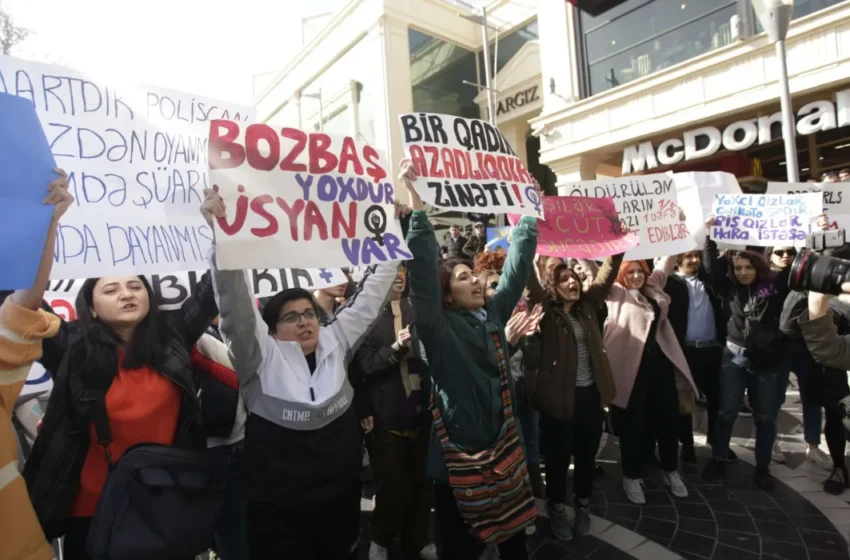
Azerbaijan’s UN Spotlight: Progress and Pitfalls in Combating Domestic Femicide
The UN Spotlight on Azerbaijan has attracted the global attention to the new response to domestic violence and femicide in the country. Azerbaijani representatives raised their issues at the recent United Nations meetings with legislative changes and statistical data that aimed to show the institution development in ensuring women were not abused at home. These are developments that are part of a wider national policy that are aimed at enhancing legal protection as well as aligning domestic policies to international human rights models.
But even the same presentations have highlighted structural gaps that persist. Although crimes against women have decreased somewhat in 2025, the number of outcomes related to domestic violence has grown over the same year. Such a disparity between the falling number of incidences and the increasing levels of death has left the analysts and the human rights activists wondering whether the existing policy instruments are sufficient in curbing the underlying factors of gender-based violence.
The global presence created by the UN Spotlight of Azerbaijan has hence created a two-fold discourse. Law reforms and better statistical reporting are available, on one side, and the enforcement limits, the lack of support infrastructure, and developing pressures in the society, on the other side.
Legislative reforms shaping Azerbaijan’s domestic violence framework
In the last ten years, Azerbaijan has established a legislative system that seeks to deal with domestic violence both in prevention and legal responsibility. The policies of the country have developed slowly due to domestic activism, international scrutiny, and lawsuits at the European courts.
Foundations of the domestic violence law
The Azerbaijani Law on Prevention of Domestic Violence of 2010 is the main principle of Azerbaijan law. This act put forth legal terms of domestic abuse and developed processes that were meant to help victims. The state institutions charged with the responsibility of family welfare, law enforcement, and social services were also given a role by the law.
In theory, the legislation established a system where the victims could request help with the help of governmental bodies like the State Committee of Family, Women and Children Affairs. This institutional arrangement over time became the main avenue of getting complaints and organizing response to reported abuse.
Introduction of rapid protection orders
In 2025, a major change was realised when short-term protection orders were introduced. Such orders enable courts to place temporary restraints on purported abusers within twenty-four hours of the time when a complaint has been presented.
The representatives of the Azerbaijan UN Spotlight stressed that the new mechanism is to offer immediate protection at the initial phases of a case. The reviews of these orders in the courts are planned within five days during which judges can decide whether the measures of protection are needed in the long term.
In spite of the procedural enhancement that is the reform, the effectiveness of the reform is largely dependent on the police force, and judicial consistency. Although well-constructed legal instruments may fail, analysts observe that unequal enforcement can weaken them.
National action plans and policy continuity
Policy planning has also contributed to the response to domestic violence in Azerbaijan. The National Action Plan 2020-23 was the foundation of further activities devoted to gender equality and violence prevention.
It has a new Gender Equality Plan that is set to run between 2026 and 2028 that will combine domestic violence prevention with social policies on a large scale. In the view of the representatives of the government, the fact that such strategic plans are being sustained is a reflection that they are committed to institutional reform on a long term basis.
Crime statistics reveal complex and conflicting trends
Statistics given at the UN Spotlight on Azerbaijan give an insight on the areas of improvement as well as the areas of challenge that persist. In 2025, official statistics published by the State Statistics Committee showed a slight decrease in the crimes against women.
Overall crime trends
The government statistics report that the number of crimes against the female victim declined by about 3.5 percent in 2025. Among more than twenty-one thousand overall crime victims in the country over six thousand cases were reported against women.
Domestic violence still constituted a huge sub-group of those figures. The government recorded close to fourteen thousand domestic violence cases in the year, most of which were of women.
Such statistics imply that reporting mechanisms are becoming more active than they used to be in the past. Increased reporting is usually a sign of increased awareness in the society and accessibility to institutional support channels.
Rise in domestic violence fatalities
Although the reported crimes have been on the decline, the number of fatalities related to domestic violence has risen due to the same period. The number of deaths related to family-related violence increased considerably in 2025 than it used to be the year before.
Out of these deaths, women were the most victims. The increase in the number of deaths points to the fact that reporting and intervention mechanisms might have increased, but have not been able to eliminate the escalation even in the most serious situations.
In 2025, this tendency was discussed in parliament. Other legislators demanded more punitive action against those who commit femicide because the severity of punishment would warn potential offenders against the repetitive behavior.
Comparative international indicators
The international comparisons are more subtle. International research on intimate partner violence ranks Azerbaijan as one of the countries that have comparatively lower lifetime prevalence rates than most other areas.
Analyses based on the metrics associated with OECD seem to indicate that Azerbaijan is highly ranked against too many nations in terms of lifetime exposure to intimate partner violence. Researchers however warn that such comparisons may be affected by underreporting and lack of independent verification.
Institutional implementation gaps and enforcement challenges
Laws can hardly eradicate domestic violence. This implementation will need coordinated enforcement of laws and judicial supervision and social support systems that will ensure the safety of victims outside the courtroom.
Police response and procedural limitations
Unequal police reactions have often been identified by human rights activists as a significant setback. The complaints are occasionally documented and fail to be tackled with or acted upon based on thorough investigations.
According to legal workers who deal with the victims, they believe that there are still officers who consider domestic fights as family issues and not criminal. Such a cultural outlook may deter the victims in seeking formal complaints.
These apprehensions have been strengthened by international legal scrutiny. In recent years, the European Court of Human Rights has made judgments that criticized Azerbaijan on the insufficient protection of the victims in some domestic violence.
Limited shelter and protection infrastructure
Another issue of challenge is support infrastructure. In the current situation, Azerbaijan has limited shelters, which can accommodate short-term accommodation to domestic abuse victims.
The demand for shelter areas has also been on the rise with the increase in awareness campaigns among the victims. In the first half of 2025, hundreds of women had already approached government institutions to seek help.
The scarcity of safe places also means that there are not many options that the victims have when quitting abusive conditions in the short run. The latter provides the risk of further violence or revenge.
Role of civil society and advocacy constraints
Civil society organizations historically played an important role in supporting victims and raising awareness about domestic violence. However, advocacy networks in Azerbaijan have faced operational challenges in recent years.
Some activists now operate from outside the country, reducing the presence of independent monitoring groups domestically. As a result, state institutions have assumed a greater role in documenting and responding to domestic violence cases.
This shift has generated debate about the balance between government-led programs and independent oversight mechanisms.
International recognition and diplomatic visibility
Azerbaijan’s UN Spotlight reflects a broader effort by the government to highlight progress on gender equality and human rights within international forums.
United Nations engagement
Presentations at UN-related events have emphasized Azerbaijan’s legal reforms, statistical reporting practices, and survey initiatives measuring gender-based violence. Officials argue that transparency in data collection demonstrates commitment to evidence-based policy.
International observers have acknowledged these efforts while also encouraging further improvements. Analysts note that public reporting of gender-related statistics is a positive step toward accountability.
European and regional policy assessments
Regional institutions have also reviewed Azerbaijan’s progress. Policy analyses within the European Union’s Eastern Partnership framework have recognized the country’s legislative developments while identifying areas requiring stronger implementation.
Comparative studies within the South Caucasus region reveal varying approaches among neighboring states to addressing domestic violence. Such comparisons place Azerbaijan within a broader regional context where legal reforms are gradually expanding.
Social dynamics influencing domestic violence trends
Beyond legal institutions, social and demographic factors shape patterns of domestic violence in Azerbaijan.
Changes in population structure, economic pressures, and migration patterns influence family dynamics and social stability. Data from recent years indicates that most perpetrators of violent crime remain male, though female involvement in certain offenses has also increased modestly.
Experts studying domestic violence emphasize that prevention requires addressing cultural norms surrounding gender roles and family authority. Education programs and public awareness campaigns therefore form an important component of long-term prevention strategies.
Future policy directions under international observation
The growing attention surrounding Azerbaijan’s UN Spotlight suggests that the country’s domestic violence policies will remain under close international observation. Planned statistical improvements and the upcoming gender equality action plan indicate efforts to refine policy responses through improved data and institutional coordination.
At the same time, unresolved challenges such as shelter shortages, enforcement consistency, and civil society participation continue to shape the national debate. The coexistence of legislative progress and persistent fatalities illustrates the complexity of translating legal frameworks into effective protection for victims.
The evolving conversation around domestic femicide in Azerbaijan therefore reflects a broader global pattern in which legal reforms advance more rapidly than social transformation. As new policy cycles unfold and international engagement deepens, the critical question facing policymakers is whether institutional reforms can move beyond legal architecture toward practical systems capable of preventing violence before it escalates into fatal outcomes.

