

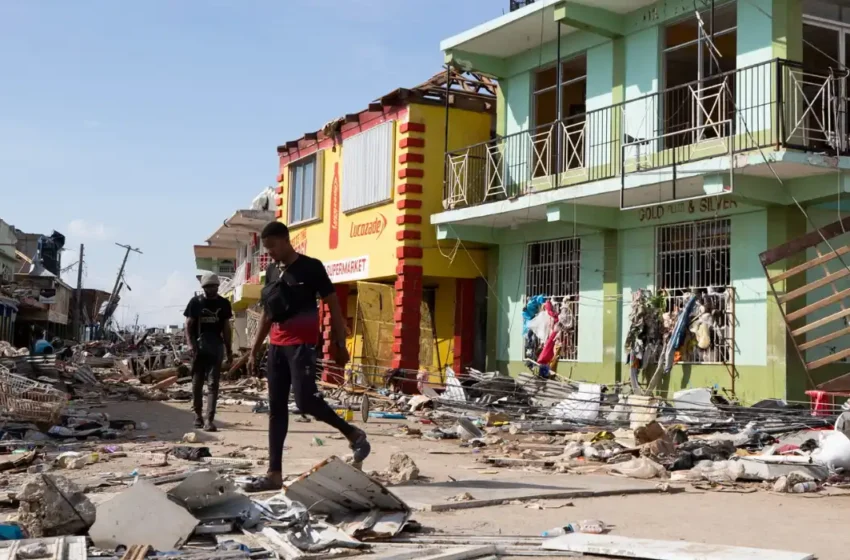
UN tax talks could force fossil fuel firms to pay for climate damage
Fossil fuel corporations may be forced to bear some of the costs of climate destruction, and the world’s super-rich may be subject to a global wealth tax, under proposals currently being negotiated at the United Nations. These proposals are part of a proposed UN Framework Convention on International Tax Cooperation, and negotiations are set to resume this week at UN headquarters in New York.
The proposed treaty has been hailed as a way of bringing about a shift in the global tax system to reflect the reality of climate destruction and inequality.
Developing Countries Push for “Polluter Pays” Rules
Several dozen nations are supporting more robust tax tools that would compel large polluters to pay towards fixing the climate and adapting to it. Yet, several developing nations feel that the current draft is too weak and does not contain any firm commitments.
The language that would target the profits of fossil fuel corporations has been watered down, and plans for a global asset registry, which is considered essential for taxing the super-rich, have been completely ditched. This has caused concern among climate-vulnerable nations, which view this treaty as a rare opportunity to right several global wrongs.
Marlene Nembhard Parker, Jamaica’s chief negotiator, cited the
“devastating effects of climate-related disasters on small economies”
and mentioned the effects of Hurricane Melissa, which destroyed “40% of Jamaica’s GDP.” Environmental taxes, she said,
“have to be reflected in the treaty.”
“There can be no sustainability without addressing climate change in the way we set up the global tax rules,”
she said.
“We need to strengthen our national and international obligations to countries and sectors that are most responsible for greenhouse gas emissions.”
Climate Disasters Add Urgency to Stalled Negotiations
Talks on the tax treaty, which was first suggested by African nations in 2022, have been slow, although climate-related losses continue to rise. Those in favor are now hoping that the agreement might be reached by the end of next year, but only if the political opposition can be overcome.
The need for the tax treaty is pressing, as climate-related disasters continue to push poorer nations into debt. Those in favor of the treaty believe that fairer tax treatment would enable nations to rebuild and develop without becoming further indebted.
“This tax is critical for domestic resource mobilisation,”
Nembhard Parker said, stressing that climate finance must come from those who have historically benefited most from fossil fuel extraction.
Rich World Resistance and the U.S. Withdrawal
Progress has been complicated by opposition from parts of the wealthy world. The United States has withdrawn entirely from the negotiations, while several high-income countries argue that global tax matters should remain within the OECD—a forum dominated by advanced economies—rather than the UN, where all countries have equal representation.
Critics say this position entrenches inequality by excluding poorer nations from decisions that directly affect their fiscal capacity and climate resilience.
Fossil Fuel Profits and the Case for Climate Reparations
If implemented effectively, the treaty could mark a turning point in efforts to make fossil fuel producers pay for climate damage. Oil and gas companies have reaped hundreds of billions of dollars in profits in recent years, particularly after energy prices surged following Russia’s invasion of Ukraine.
Research by Eurodad and the Global Alliance for Tax Justice suggests that a 20% surtax on the profits of the world’s 100 largest fossil fuel producers would have generated more than $1 trillion over the decade since the Paris Agreement was signed in 2015.
Campaigners argue this revenue could transform climate adaptation and loss-and-damage funding for the countries hit hardest by global warming.
Extreme Inequality Fuels Calls for a Global Wealth Tax
The treaty could also open the door to coordinated taxation of extreme wealth. Inequality has surged globally, with the richest 0.001%—around 56,000 people—now holding three times more wealth than the poorest half of the world’s population.
According to the Tax Justice Network, countries lose an estimated $492 billion annually as multinational corporations and wealthy individuals exploit tax havens. A coordinated annual wealth tax of up to 5% on the ultra-rich could raise around $1.7 trillion per year, dramatically increasing resources available for climate action and development.
Sergio Chapparo Hernandes of the Tax Justice Network said the upcoming negotiations would test whether governments are willing to adapt tax rules to the “age of climate catastrophe.”
Climate Justice Demands Accountability from Major Polluters
For countries on the front lines of climate change, taxing fossil fuel companies is not simply an economic issue but a moral one. Tuvalu’s UN ambassador, Tapugao Falefou, highlighted the stark imbalance between those causing the crisis and those suffering its worst effects.
“The fossil fuel industry and the super-rich continue to increase their wealth while we try to keep our heads above water,”
he said, pointing to the existential threat facing low-lying island nations.
While many countries already tax fossil fuel consumption domestically, only producer states can levy charges on extraction itself—strengthening the case for a global regime. Similarly, fears that wealth taxes would drive capital flight could be mitigated if a critical mass of countries agreed on minimum standards.
UK Signals Shift Toward Supporting UN-Led Tax Reform
The UK has previously been viewed as sceptical about using the UN as the main forum for global tax negotiations. However, campaigners say London has recently adopted a more constructive stance, including explicit support for the “polluter pays” principle.
A UK Treasury spokesperson confirmed the government’s engagement, saying:
“The UK has been an active participant in tax negotiations at the UN and remains committed to working constructively to ensure inclusive and effective international tax cooperation.”
Whether that commitment translates into support for stronger, enforceable measures remains a key question as negotiations resume.

