

UN yet to be formally informed of US decision to leave agencies
The United Nations has verified that it has yet to receive the formal notification from the American government with respect to the withdrawal decision of United States President Donald Trump from at least several international groups, including 31 groups affiliated with the United Nations. This has already created shock waves in the international system.
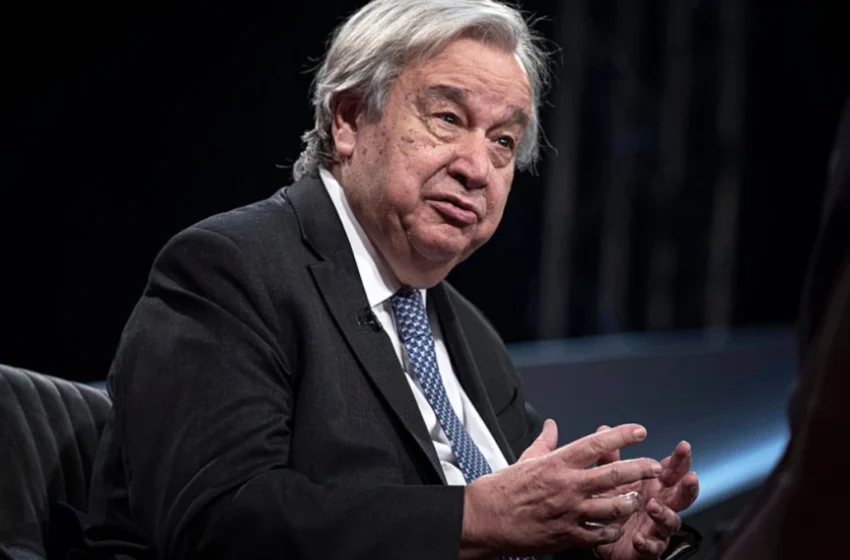
Asked point-blank whether the UN has been notified regarding the decision, the spokeswoman for the UN Secretary-General, António Guterres, Stéphane Dujarric, responded firmly with “No,” emphasizing the difference between White House statements and the formal processes of diplomacy. This lack of notice also doesn’t help to mitigate the implications of the decision, as it appears to represent the further withdrawal of the US from global governance institutions.
Through a presidential memorandum dated January 7, the Trump administration has indicated that it will be pulling out of a total of 66 international organizations, of which 31 belong to the UN system and the other 35 outside the UN, because the organizations “no longer serve the interests of America.” Despite the fact that the Trump administration has not made the list of the organizations known, the extent of the pullback is one of the biggest in the history of the US.
Legal obligations versus unilateral disengagement
In a statement made on January 8, the UN Secretary-General expressed regret regarding the announcement, explicitly stressing Washington’s obligatory responsibility under the UN Charter. The statement further clarified that the contribution towards the UN budget as well as the peace-keeping budget “is not a matter of choice, but a binding obligation approved by the General Assembly.”
This is important. Although it is possible that the US could opt not to be involved politically or physically with certain agencies within the UN, it is not possible to opt out of financial commitments without breaking international law. Today, America is locked in as the UN’s largest individual contributor, accounting for approximately 22% of basic operating costs as well as 26%-27% of peacekeeping expenditures.
In past instances, threats by the US government to withhold funds, most prominently in the Reagan administration in the 1980s and in Trump’s first term, had seriously strained budgets. In Trump’s earlier term, the US withdrew from UNESCO, the UN Human Rights Council, and the World Health Organization, with hundreds of millions in funds frozen and reallocated because of emergencies in the various agencies within the UN. It would seem that the present Memorandum portends either an instance of the same, possibly an escalation.
Who pays the price: humanitarian and security fallout
While the White House frames the withdrawals as a cost-saving and sovereignty-preserving measure, the practical consequences are likely to fall disproportionately on fragile states and vulnerable populations rather than UN bureaucracies.
UN agencies targeted in past US pullbacks—including WHO, UNRWA, and development programs—play frontline roles in vaccination campaigns, famine prevention, refugee assistance, and post-conflict stabilization. US funding accounts for:
- Roughly 15% of WHO’s total budget
- Nearly one-third of UN humanitarian appeals in some crisis years
- A critical share of peacekeeping operations in Africa and the Middle East
Some analysts forecast a sudden and dramatic disengagement of the US as a negative factor toward the success of many of its missions within the very regions where America has strategic interests. For instance, the UN peacekeeping missions in Mali, the Democratic Republic of the Congo, South Sudan, and the Lebanese republic already have funding shortages.
Ironically, these consequences may lead to increased instability, displacement, and security risks, which may ultimately harm US allies and, in some cases, the US itself.
Multilateral retreat as political strategy
The Trump administration’s move fits a broader ideological pattern that treats multilateral institutions as constraints rather than force multipliers. By framing UN bodies as entities that “no longer serve American interests,” the White House adopts a narrow, transactional definition of national interest—one that discounts indirect benefits such as norm-setting, crisis prevention, and burden-sharing.
This approach also risks ceding influence to strategic competitors. As the US steps back, China has steadily expanded its footprint across the UN system, increasing both funding and personnel in key agencies. Beijing now ranks second in assessed contributions and has successfully placed Chinese nationals in senior leadership roles across UN bodies dealing with development, telecommunications, and industrial standards.
European diplomats have repeatedly warned that US disengagement does not weaken the UN so much as reshape it without American input.
The UN’s response: resilience or quiet alarm?
Publicly, the UN has adopted a posture of resolve.
“All UN entities will go on with the implementation of their mandates as given by member states,”
the Secretary-General’s spokesperson said, stressing the organization’s responsibility to “deliver for those who depend on us.”
Behind the scenes, however, the uncertainty is deeply destabilizing. Without clarity on which entities are affected, the timeline for withdrawal, or the status of funding, UN agencies are left unable to plan budgets, staffing, or operations. Senior officials privately describe the situation as one of strategic paralysis, particularly for agencies heavily reliant on US voluntary contributions.
The lack of formal notification further complicates matters, suggesting that the announcement may be as much political signaling as policy execution. But even signaling carries consequences: it erodes confidence in the predictability of US commitments and encourages other states to hedge against similar unilateral exits.
A test for global governance
Ultimately, the US decision—and the ambiguity surrounding it—represents a stress test for the post-World War II multilateral order. If the world’s most powerful state treats treaty-based institutions as optional, the precedent weakens collective action precisely at a time of overlapping global crises: climate change, armed conflict, pandemics, and mass displacement.
For the UN, the challenge is survival with credibility. For the US, the risk is strategic self-isolation—paying fewer dues, but also wielding less influence. As history has repeatedly shown, disengagement does not eliminate global problems. It merely ensures they are managed by others, often in ways less aligned with American values or interests.

