

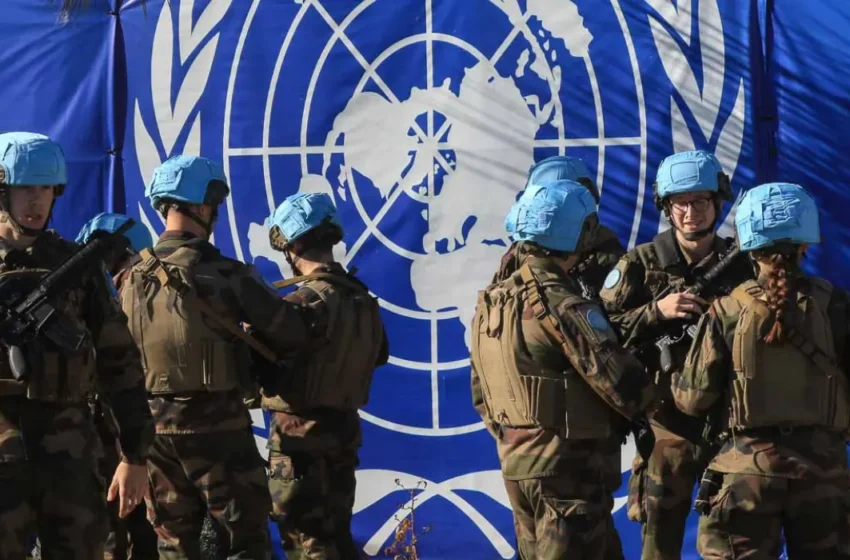
UN Peacekeeping: Protecting Peace in a Turbulent World
The last twenty years have also experienced a radical shift in the nature of the United Nations peacekeeping operations, as the institution is now capable of responding to dynamic political circumstances and more intricate conflict engines. Formed with the purpose of observing the ceasefires and assisting political transitions, now they all have multidimensional duties which include the protection of civilians, assisting in disarmament, in elections, and in humanitarian accessibility. This development is reflected in the scope of the UN peacekeeping in 2025 and is informed by conflicts that are affected by climate pressures, technological disruptions, and changing geopolitical alliances.
The renewals of the Security Council mandate in 2025 show the increasing need to utilize the integrated approaches to incorporate the military, political, and development aspects. The purpose of these hybrid strategies is to react suitably to internal conflict between states in which military organizations, criminal gangs, and transnational actors exist with elastic networks and little concern regarding the conventional negotiation processes. The focus on multidimensional operations underscores the acknowledgment of the fact that peacekeeping should not be isolated but it should go hand in hand with the state-building and wider conflict prevention plans.
Operational challenges in high-risk environments
The missions of peacekeeping in 2025 are also deployed in the most unstable areas in the world, where the disunity of authority and instability frustrate the success of interventions at the international level. The current operational challenges of the missions in Sahel, Democratic Republic of Congo, and the Central African Republic depict the mounting pressure on peacekeepers.
Political complexities and mandate limitations
Mission outcomes are greatly influenced by political sensitivities. The host states tend to place limitations on the free movement of the peacekeepers, access to information and planning. Otherwise, some governments use the sovereignty arguments to question UN accounts of human rights abuses or targeting civilians. Consequently, diplomatic involvement has to balance the moral obligation to defend civilians and diplomacy, an issue that, in many cases, informs the discussions of the Security Council.
The 2025 missions tend to lean more toward the concept of proactive protection, which makes the peacekeepers anticipate a threat, instead of responding to one after violence has taken place. Strengthening of mandates has however been thwarted by political division in the Council. Disagreements among the major powers on intervention levels and the application of force sometimes lead to low compromise requirements which minimize the operational efficacies.
Security risks and peacekeeper protection
Safety of the peacekeepers is one of the main issues. The mission sustainability is still challenged by attacks on UN convoys, the extensive application of improvised explosive devices, and the attack on civilian sites in areas surrounding peacekeeper bases. In early 2025, according to the Department of Peace Operations, the casualty rate among uniformed staff members had been increasing and decreasing with the levels of conflict in various regions.
Among the newest safety measures, which will be implemented in 2025, there will be enhanced terrain monitoring, increased rapid response teams, and increased use of armored transport technology. Included in the improved pre-deployment training is cyber awareness, drone navigation, and counter-IED tactics. These adjustments are reflective of the UN efforts to enhance resiliency of peacekeepers to the growing asymmetrical threat.
Humanitarian constraints and civilian vulnerability
Massive displacement and limited access to conflict areas reduce the capacity of missions to support the civilian population. Peacekeepers in some of the operations play a crucial role as liaisons between the humanitarian agencies and the vulnerable populations. Nevertheless, logistical challenges, weather interference, and blockades by armed groups remain and hinder the establishment of humanitarian corridors or the preservation of grounds of peaceful aid delivery.
Multilateral cooperation and resource mobilization
The success of the UN peacekeeping in 2025 is directly connected with the collaboration with the regional and international actors. Increased geopolitical competition has seen the need to use cooperation models to maintain the mission mandates and bridge capability gaps.
Strengthening collaboration with regional organizations
African Union and UN cooperation, especially hybrid missions and joint planning missions are considered to be one of the significant aspects of the peacekeeping strategy. The regional agencies offer contextual insight and political legitimacy, whereas the UN offers expertise, training and logistical assistance. Some concerted efforts were initiated in 2025 to enhance intelligence-sharing models to enable operations to respond to swiftly evolving conflict situations.
Closer relations to the European Union have also promoted the flexibility of funds and special training courses. In the meantime, in Asian and Latin American regions, the regional blocs have been more active in terms of involvement in the form of observers and technical contributions.
Funding pressures and political support
The problem of funding is also stable. The major contributors such as global economic pressures and domestic budget constraints have provided a platform of increased scrutiny over peacekeeping expenditures. The budgetary discussions of 2025 were marked by the increased gap between the states that sought to cut the costs and the ones that saw the necessity of stronger and better-armed missions.
The viability of the missions is directly affected by political support by the members of the Security Council. In the absence of Council cohesion, mandate renewals are controversial, scaling of missions is uncertain and troop-contributing countries are unable to get reimbursements. These problems highlight the fact that the issue of peace keeping is still tightly connected with the dynamics of global politics, rather than the situation on the ground.
Innovations transforming peacekeeping strategy
Peacekeeping operations are increasingly characterized by the concept of technology, data integration and human-centered approaches, which influence the way missions collect information, interact with communities and keep track of the development of conflicts. These inventions are associated with a wider scope of UN reforms to make the missions more agile and accountable.
Digital tools and remote monitoring
The emergence of digital intelligence has transformed mission planning and operations. Satellite imagery, drones, and geospatial analytics are heavily used in 2025 peacekeeping to monitor the activities of the armed groups and evaluate humanitarian assistance. These devices enable peacekeepers to monitor distant or unreachable places where the patrols are under serious security threats.
Information collection systems based on data analytics are designed to take real-time data gathered by field observers and allow making more accurate threat evaluations and formidable emergency response systems. Such improvements will assist in avoiding escalation and making sure that military, police, and civilian elements of missions are coordinated quicker.
Local engagement and cultural expertise
The local contexts are important to the credibility and effectiveness of peacekeepers. The UN has broadened recruitment requirements to encompass regional language proficiency, mediation expertise as well as cultural knowledge. This will help to minimize community mistrusts and avoid misunderstandings that end up inflaming tensions.
In 2025, peacekeepers will be more engaged with leaders and women networks in communities, youth organizations, to discover early conflict indicators. Such partnerships enhance early intervention capabilities and help in long-term stabilization beyond the security needs in the here and now.
Training reforms and accountability
The training of peacekeepers also develops, and now there are modules on human rights compliance, gender sensitivity, climate-related security risks, and digital ethics. Mechanisms of accountability have also become stronger in 2025, and the timelines of investigation have become quicker and the control over troop-conduct problems has become stricter. These reforms will strengthen the confidence of the communities to the peacekeepers and vice versa and also the confidence of the UN to the member states.
UN peacekeeping’s path through 2025
The trajectory of UN peacekeeping in 2025 reflects both its enduring relevance and growing vulnerability. Missions continue to provide essential support in regions facing violence, displacement, and political instability, yet their success depends heavily on global political alignment, adequate financing, and adaptive operational strategies. As conflicts become more fluid and interconnected, the evolution of peacekeeping will likely hinge on integrating new technologies, strengthening regional partnerships, and deepening community engagement. The questions emerging from these developments point toward the next phase of peacekeeping transformation, inviting closer examination of how the UN can balance ambition with practicality in an increasingly turbulent world.

