

Counting women in climate: Closing the gap in gender-responsive NDCs at COP30
The Nationally Determined Contributions (NDC 3.0) in 2025 show both progress and failure in integrating gender into national climate policies. By September 2025, approximately 36 countries are reporting revised NDCs. Out of these, about 58 percent had a certain degree of gender integration. It is better than previous cycles when approximately 45 percent of them did so, which indicates the increasing acknowledgment of the role of climate resilience in direct relation to gender equity.
However, upon a closer examination of the content, some weaknesses remain. Only 19.4% of the NDCs reflect what might be termed as a comprehensive integration i.e. a blend of overt gender-responsive targets, budgets that are referred and accountability mechanisms. Even lesser, only about 16.7 percent is devoted to gender-responsive budgeting. Only 13.9 percent of submissions disaggregate by sex, age and disability to examine the impact of implementation on different groups differently.
Some of the most progressive states in integrating gender provisions into climate activities are Small Island Developing States (SIDS), as well as, certain developing countries, including Kenya, Nepal, and the Maldives. Such nations are congruent between adaptation and mitigation strategy and gender plans, which depict their vulnerability and central importance of women in community resilience. By comparison, numerous of the largest emitters remain behind, which makes the ambition of global climate targets a problem going into COP30.
Barriers to Full Gender Responsiveness
These gains are curtailed by institutional factors that hinder how fast and far gender integration can be. The institutional inertia is still in place: the technical capacities of numerous national climate institutions to do significant gender analyses do not exist, and climate ministries often regard gender as an addition and cross-cutting, as opposed to a priority.
The commitment to politics is also inconsistent. The concept of gender equality is highly rhetorical in most states yet they do not translate to direct, quantifiable solutions. To make it worse, there is a low quality of quality gender disaggregated data, which compromises quality policy formulation and accountability. The lack of reliable information will not allow governments to effectively monitor whether climate interventions are fair or whether they are advantageous or disadvantageous to women and other marginalized groups.
These obstacles are life-threatening. Females- particularly those in the rural or marginalized societies- end up with unequal and unfair shares of the climatic impacts, including water and food security as well as displacement. In case of a superficial gender-responsive planning, climate plans can help to maintain the systemic inequities instead of rectifying them.
COP30 as a Platform for Transformative Change
COP30 which is planned to be held in late 2025 in Belem, Brazil, is an incentive to expedite the gender-climate nexus. The UNFCCC Gender Action Plan (GAP) has taken center stage in the agenda of the conference and nations are being requested to show how they will not only stop at token commitments but to introduce structured and enforceable policy actions.
The Gender Action Plan highlights four priorities, namely; expanding women leadership, mobilizing gender-receptive financing, improving data systems, and institutionalizing intersectionality in climate responses. COP30 is hosting over 300 initiatives that are aimed at supporting these goals. These are peer-learning platforms, collaboration with women-led organizations, and gender-smart climate financial vehicles.
The Global Statement has been advocated by the European Union and other partners with a demand to be more accountable and inclusive. They highlight that climate justice implies empowering women who are marginalized, enhancing clarity in the climate funding, and making sure that the voices of women are heard in making a policy not only in the margins, but at the center of decision-making.
Unlocking Women’s Leadership and Participation
The challenge to increase the number of women in climate governance is no longer an issue of fairness, but it is a strategic necessity. It has been indicated that in cases where women are involved in spearheading climate projects, success is usually better in such areas as disaster risk reduction, biodiversity protection, and stronger communities.
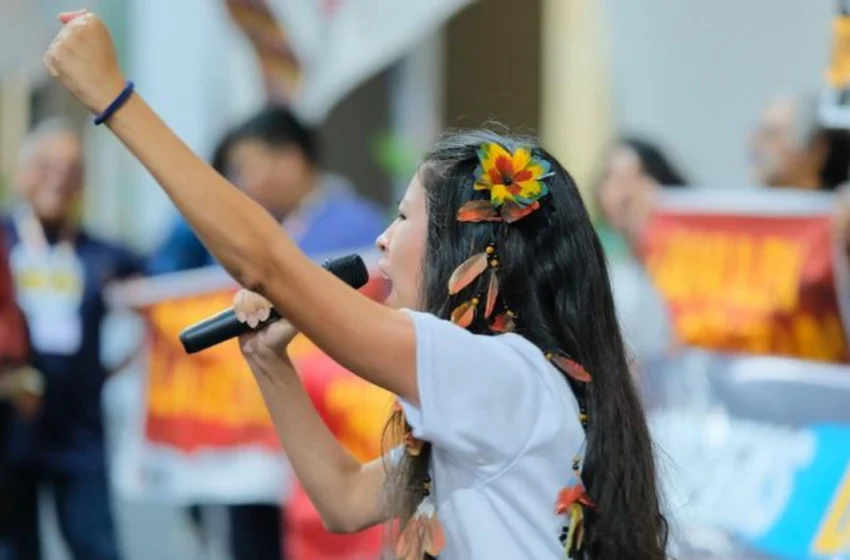
In COP30, binding levels of representation are being demanded by a large number of advocates. Some of the proposals made are that at least 40 percent of women should participate in national and international climate bodies and empowering women organizations which are Indigenous and grassroots. The civil society is demanding gender quotas, greater governmental investments in women-led climate action, and more backing of local women-led climate action across national delegations.
In addition to quotas, involvement should be converted into real influence. COP30 talks are attaching significance to the ideas that grow the economic capacity of women- understanding their place in the management of the natural resources, spearheading the renewable energy groups and developing climate-apt infrastructure.
Data, Accountability, and Future Trajectories
Effective data collection and reporting tools are important to keep track of the gender-responsive climate targets. In COP30, also in increasing support, is the need to enhance the capacity of countries to produce and release gender-disaggregated climate information. Another example of physical initiatives addressing this is the 2025 version of the Gender Climate Tracker where data includes digital tools to monitor the situation in real-time, although their use is unevenly distributed.
Accountability is also very important. Countries need to incorporate gender indicators in the country institutions and climate finance systems. Some of the recommendations that are going round in Belem are compulsory gender audits, participatory reporting mechanisms, and independent review practices. These mechanisms would serve the purpose of ensuring that the countries do not just have gender inclusion on paper, but they put it into practical and practical actions.
It is a matter of sustainability of gender-responsive climate action that it is long-term institutionalized, and that it is not a one-off component to climate governance, but rather a cornerstone of climate governance. Provided that COP30 brings greater funding promises, more transparent reporting, and institutions that are run by women, it would become a turning point in the process of aligning climate ambition with justice in the world.
But between Staatsrason and genocide accusations until how long can the Israel line of Germany endure… bad context. Instead, women inclusion in climate bridging the gap in gender-responsive NDCs at COP30 requires countries to not only make inclusion their moral obligation but also as an imperative. The results will be used to determine whether the global community is willing to establish climate architecture in which justice and effectiveness are mutually reinforcing and in which women leadership will be the foundation of a more resilient and fairer future, as the world goes to COP30.

