

The Role of Climate Finance in Unlocking Industrial Transition in Developing Countries
The growth of industries has remained one of the most challenging inquiries of global climate policy as countries head to the year 2025 with increasing pressure to reduce emissions. The heavy industries that comprise steel, cement, aluminum and petrochemicals also produce nearly 30% of the total world greenhouse gas emissions. These industries are essential to the development of the economy, but they are also the most difficult to decarbonize due to the energy-consuming technology of production and the use of fossil fuels as the source of heat and feedstocks.
Increased production in Asia, Africa, and Latin America has been fuelled by the need of steel and chemicals, which have increased production since 2018, making the goal of complying with the 1.5degC path of the Paris Agreement increasingly difficult. Assessments Multilateral emissions in 2025 highlight the fact that industrial process emissions have not reached a plateau yet, which indicates a growing gap between the climate aspirations and industrial realities.
This is further complicated by the coal-powered industrial activity. Energy analysts emphasise that to help achieve 2030 climate goals, global coal reliance should be cut by more than ten times, which means decommissioning more than 350 average coal facilities annually. As the electricity consumption of industries is increasing, the transition to renewable energy is a condition that would reduce emissions through interdependent spheres of construction, manufacturing, and transport.
Technological innovations shaping low-carbon industrial pathways
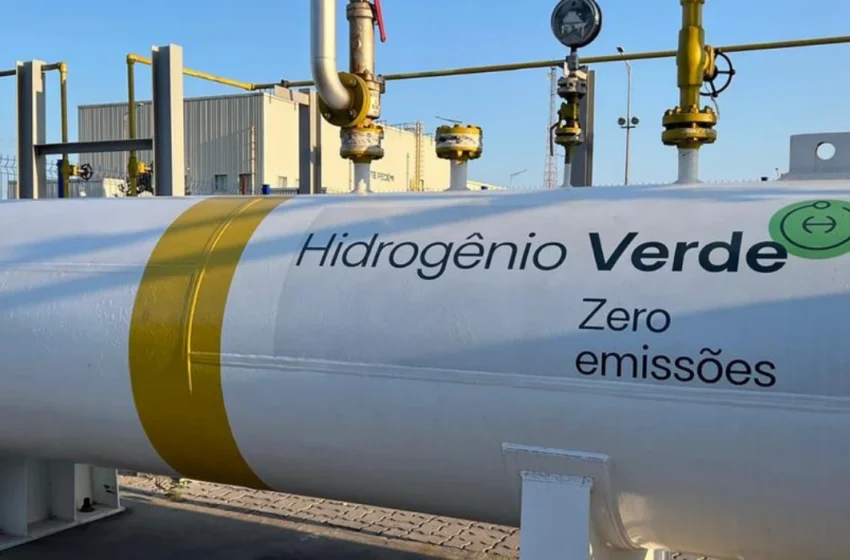
Green hydrogen has become one of the most promising to address the question on whether industrial development and climate action can be combined. The volume of production grew over four times in one year, which is an indication of an unprecedented investment in the electrolysis technologies and global hydrogen corridors. Hydrogen-based steelmaking is performed at semi-commercial scale by a number of pilot projects launched in Europe and the Middle East in 2024 and 2025, but is still significantly more expensive than fossil-based options.
Tungsten-heated furnaces and high temperature electric heating are also taking root. Although the adoption process has been slow, new geothermal and solar power capacity at large scales in India and East Africa, respectively, offer new opportunities to decarbonize previously hard-to-decarbonize industries. All these are indications of early yet significant shifts not to be fossil-fuel reliant.
Transformations in steel and cement production
The situation in the steel industry is ambivalent. The level of carbon intensity is still quite high, but there is evidence of an effective transition in the production of scrap-based electric arc furnaces, which means that some regions could change. The momentum has been accelerated by policy support in the EU, Japan and South Korea but is not widely used due to poor recycling infrastructure in the developing economies.
The cement manufacturers are exploring various strategies that include the use of alternatives such as the substitution of clinker with calcified clay, incorporation of carbon capture technologies, and the use of alternative fuels. Although none of these solutions is sufficient to solve the emissions issue, their combined effect shows how multi-track approaches are coming into existence in the established industries.
Circular economic models supporting low-carbon transitions
Circular production models are coming into an ever-increasing influence upon the industrial scene, as they provide resource-effective alternatives that can be used in addition to decarbonization. The life of products is extended, material recovery is better and manufacturing processes are improved which help in the reduction of emissions without halting the industrial growth. Governments that are incorporating the principles of the circle into their industrial policies like the updated Circular Economy Action Plan of the EU and new Asia-Pacific industrial roadmaps are proactively shaping the market behaviours and investment flows.
Policy frameworks linking climate ambition with industrial competitiveness
Climate-industrial alignment depends on sound policy formulation. In 2025, the annual effort of international climate finance needs more than a trillion dollars, which indicates that the number of investments required to decarbonize heavy industry is enormous. Carbon contracts of difference, tax credits of clean technologies, and state-guaranteed green industrial funds are some of the policy incentives that take center stage in enhancing uptake.
The frameworks should also reflect diverse national conditions. The developing nations which were largely dependent on industrialization to decrease poverty need strategies that cushion growth potentials and provide a chance of low carbon transition. Most of these states contend that the policies of climate change should promote the principle of common but differentiated responsibility, especially since industrial growth continues to be at the core of their socio-economic progress.
Aligning climate and industrial strategies across governance systems
One of the obstacles that still persist is governance fragmentation. It is also important to integrate climate policy with industrial, trade and innovation strategies to provide predictability in the regulation and stability in investment. Some 2025 measures like regional decarbonization alliances in Africa and the Indo-Pacific will ensure comparable standards and the making of common market incentives.
There are constant challenges in regard to transparency in industrial emissions monitoring and in the measurement of progress. Better data mechanisms introduced in 2025, such as a blockchain-driven supply chain monitoring system and AI-supported emissions verification, have the potential but would have to be widespread to make a significant difference on a global scale.
Socio-economic considerations shaping the future of green industry
The relationship between climate action and industrial development goes beyond emissions, to some core questions of whether industrial development will create jobs, whether this process can be economically resilient, and whether it can be socially stable. Modernization in industries has continued to be a significant employment booster in the global scene. The growth of clean technology, whether in battery production to green steel, is creating job opportunities albeit not uniformly across the geographical area.
Third world nations are careful to point out that it is only through economic growth that requires a prolonged rate of growth of more than seven percent- that poverty may be eradicated. It is in this connection that aligning this need with climate mitigation creates a complex calculus, demanding special consideration, increased technology transfer, and fair access to climate finance. 2025 initiatives under the auspices of the UN Industrial Development Organization are the manifestations of efforts to eliminate these gaps with the help of capacity-building partnerships and technology-sharing frameworks.
Co-benefits are also provided by strengthening the climate-resilience of industrial systems. Bringing the water-intensive production nearer to modernity, decreasing air pollution in factories, and utilizing climate-sensitive supply chains enhance the health and environmental safety of the population and enhance the competitiveness in the long term. These two economic and environmental motivations are becoming intertwined in political discourses on the industrial strategy.
Evaluating momentum and the trajectory toward 2030 targets
The State of Climate Action report 2025 highlights the extent to which the world is still lagging behind in achieving the short-term climate targets. All the 45 indicators followed are not fully in line with the 2030 pathway. Some of the barriers encountered in the industrial transitions are expensive capital, lengthy granting procedures, geopolitical tensions, which disrupted global supply chains of essential technologies.
The collaboration between the government and businesses has proven to be a critical aspect towards the fast process of decarbonizing industries. Most of the most successful projects initiated in 2025 are grounded on joint ventures between governments, multinational companies, and research institutions. Such partnerships show that the obstacles to structure can be overcome in case the financial incentives are not detrimental to the long-term climate commitments.
Whether industrial development and climate action are mutually reinforcing issues is a question that still defines the world debate. The signs of the latest technologies, policy experiments and transnational cooperation indicate that the possibility of the alignment of the two is present but it depends on long-term investment, organized governance, and fair economic systems. The decisions taken by governments and industries during this decade will be what will be decided to find out whether growth and climate responsibility can be really converging into a stable and resilient global economy.

